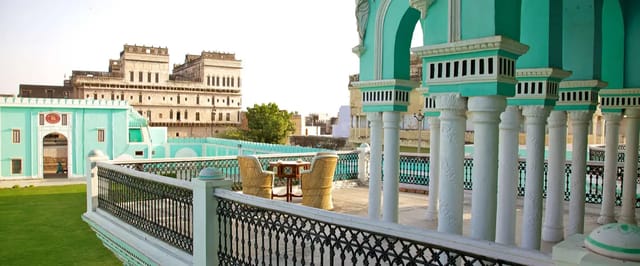
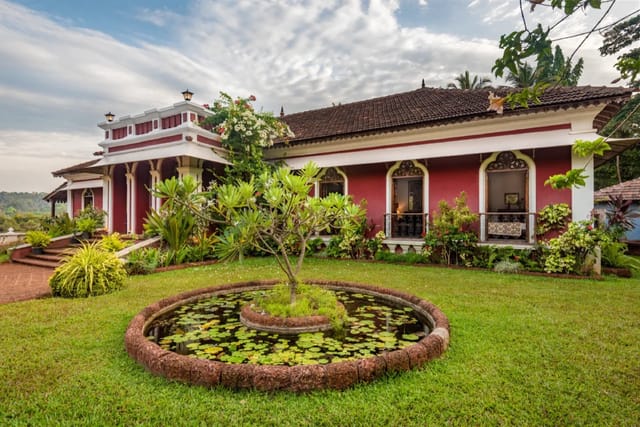
"A 1735 family haveli in Jaipur's walled city, now an all-suite hotel of 15 rooms with a rooftop pool and two bars"
The house
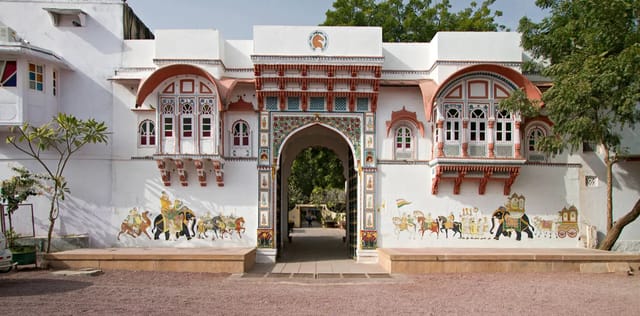
The family dates the haveli's foundation stone to 1735, laid by Shri Seva Ram Ji in answer to Sawai Jai Singh II's royal summons — which puts the house at the very founding era of Jaipur itself. It began life as a jewellery *gaddi* (trading seat) on Chaura Rasta, one of the oldest and widest streets of the walled city, cut broad enough for elephant processions heading to the City Palace. Seven generations later the same family still runs the place, now as an all-suite hotel named for their grandmother, Shrimati Padmaa Devi Shah — Amma to her grandchildren — whose portrait logic governs the house: strength, warmth, grace.
The rooms
Padmaa is all-suite: 15 uniquely styled suites across four categories (Deluxe Room, Deluxe Suite, Royal Suite, Heritage Suite), merging traditional Rajasthani architecture with modern comfort. Expect pastel frescoed walls, four-poster beds and arched niches rather than corporate beige.
The table, and two bars
The courtyard restaurant serves traditional Rajasthani recipes alongside international cooking, and there is terrace dining under the stars. The hotel keeps two bars — one tucked into the serene courtyard, the other an open terrace bar with sunset views across the old city's skyline. A rooftop pool and spa look out over the Pink City; a miniature courtyard called Chandni is reserved, the hotel says, for poetic evenings in the moonlight.
Out of the door
This is the walled city proper: the hotel puts Hawa Mahal, City Palace, Jantar Mantar and the Albert Hall Museum at around a ten-minute walk. The house runs personalised walks — food, photography, heritage and temple routes through the artisan lanes of Thateron Ka Raasta (brass) and Maniharon Ka Rasta (lac bangles) — plus a dawn horse-carriage ride through the old city and live Indian classical musicians in the courtyard by evening.
 New
New